Compliance
Bring Your Own Auditor (BYOA): Why Auditor Independence Matters More Than Ever
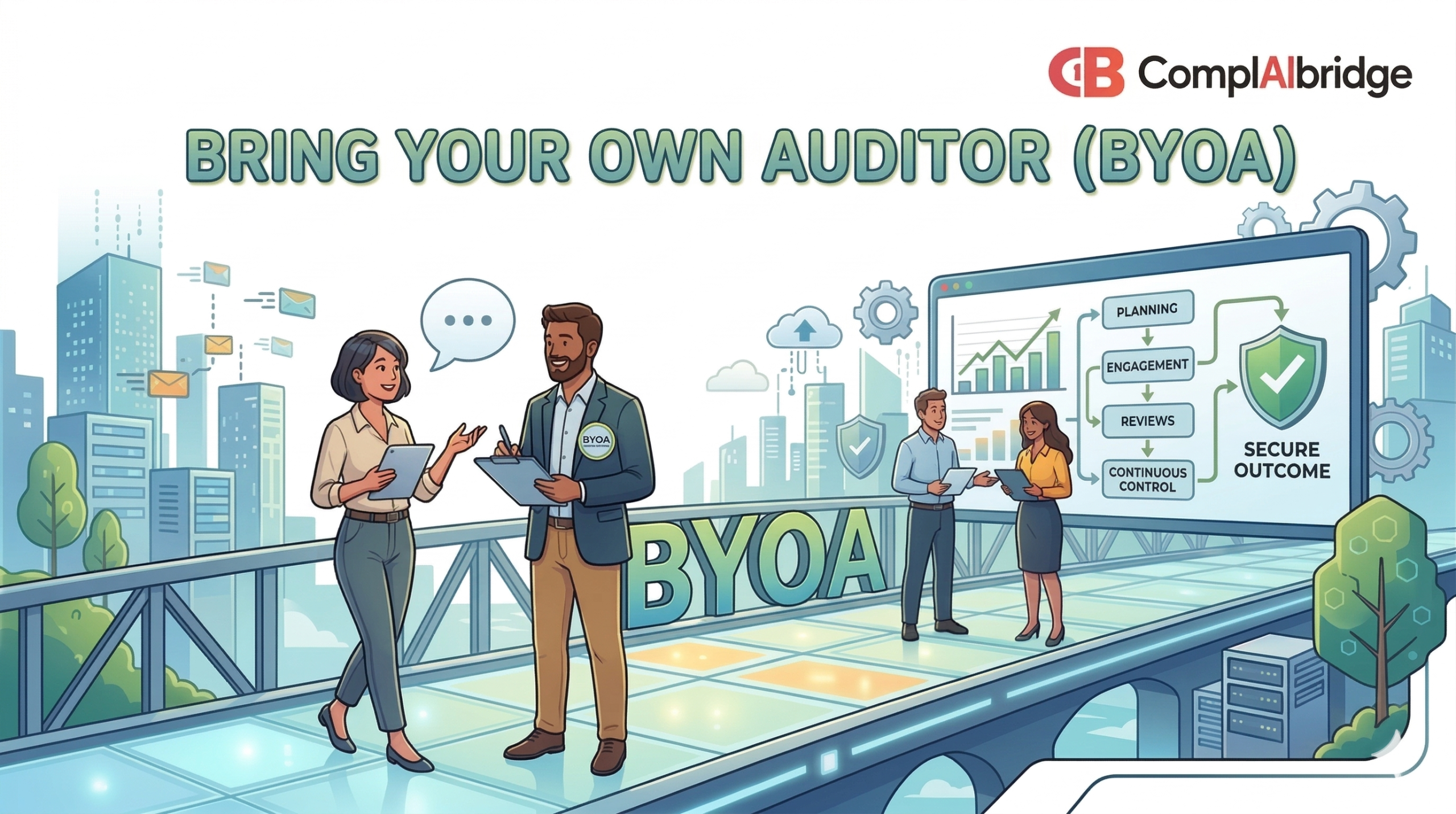
For most organisations, audits are something you prepare for and not something you control. You wait for the audit window. You gather evidence. You hope everything holds up. While many organisations can choose their auditor, they're often limited to predefined or platform-assigned options, restricting true independence.
That's where Bring Your Own Auditor (BYOA) changes the equation.
It enables organisations to select their own independent auditor, ensuring greater transparency, trust, and flexibility in how audits are conducted.
Recent investigations into 'fast-track' compliance platforms, often resembling certification mills, have shown how easy it is to generate audit reports that look impressive on paper but lack real, independently validated evidence. In this environment, who audits you and how your evidence is gathered matters more than ever.
What is BYOA?
Bring Your Own Auditor (BYOA) allows organisations to select their own independent auditor rather than being restricted to a predefined or platform-assigned option.
At its core, BYOA is about ownership:
- Ownership of who evaluates your controls
- Ownership of how your systems are assessed
- Ownership of the quality and depth of your audit
Instead of fitting into a one-size-fits-all audit process, organisations can choose auditors who:
- Understand their industry
- Align with their risk profile
- Bring the right level of scrutiny and expertise
Why the auditor you choose matters
Not all audits are created equal. Two organisations with similar systems and controls can walk away with completely different audit outcomes depending on who is assessing them. Some auditors approach compliance as a checklist exercise, focusing on whether documentation exists. Others go deeper with understanding how systems actually operate, how controls are enforced, and whether they hold up in real-world scenarios.
This difference directly impacts how credible your compliance posture is perceived to be, both internally and externally. A strong auditor doesn't just validate that controls exist. They challenge assumptions, uncover gaps, and ultimately strengthen your overall governance. In that sense, the auditor you choose becomes an extension of your compliance strategy, not just a final checkpoint.
BYOA: A step towards better compliance
BYOA represents a meaningful shift from compliance as an obligation to compliance as ownership. It moves organisations away from simply passing audits and toward building systems that can stand up to real scrutiny.
However, while BYOA gives you independence over who audits you, it doesn't fundamentally change how compliance is managed day to day. Most organisations still rely on manual processes, fragmented tools, and last-minute preparation to meet audit requirements.
See it in action
See how ComplAIbridge fits your stack
Book a 20-minute walkthrough - no deck, no sales cycle, just the product.
Book a DemoChoice alone doesn't fix the process
Even with the right auditor in place, the operational challenges of compliance remain. Evidence still needs to be collected, validated, and organised. Data still lives across tickets, logs, spreadsheets, and emails. And when audit time arrives, teams often find themselves reconstructing proof instead of presenting it.
This is where Complaibridge begins to change the equation, not by replacing auditors, but by transforming how organisations prepare for them.
The missing layer: continuous, audit-ready evidence
What organisations need is not just better audits, but better audit readiness. Instead of treating compliance as a periodic exercise, evidence should be generated continuously, as part of everyday operations.
With Complaibridge, compliance is embedded across the software delivery lifecycle. Controls are mapped to real systems, actions are tracked as they happen, and evidence is captured automatically creating a structured, traceable audit trail without the need for manual intervention.
This means that by the time an auditor is involved, the groundwork is already done.
From audit preparation to audit readiness
The real shift is moving from preparing for audits to being ready for them at all times. When compliance is integrated into workflows, every change, every fix, and every validation contributes to a continuously updated record of assurance.
In this model, audits are no longer high-pressure events that require weeks of preparation, often affecting other deliverables too. Instead, they become straightforward validation exercises, a review of evidence that already exists and is readily accessible.
Where BYOA meets continuous compliance
BYOA gives organisations the freedom to choose the right auditor. Continuous compliance ensures that, regardless of who that auditor is, the evidence they need is always available, consistent, and reliable.
Together, they create a much stronger compliance posture, the one where organisations can influence both the audit process and the underlying readiness. With Complaibridge acting as the operating system for compliance activity, organisations can confidently engage auditors knowing that every action and outcome is already documented and traceable.
Final thought
BYOA gives you the option to choose who audits you. The next step is gaining control over how audit-ready you are every day.
Because in a world of increasing regulatory scrutiny, the real advantage is not passing audits but building a truly compliant and secure posture, with purpose. It's never having to prepare for one again.
Keep reading
 Compliance
What Organisations Still Get Wrong About Audit Readiness
Most organisations say they're "audit-ready" right up until the audit actually begins. That's when the familiar patterns emerge.
 Compliance
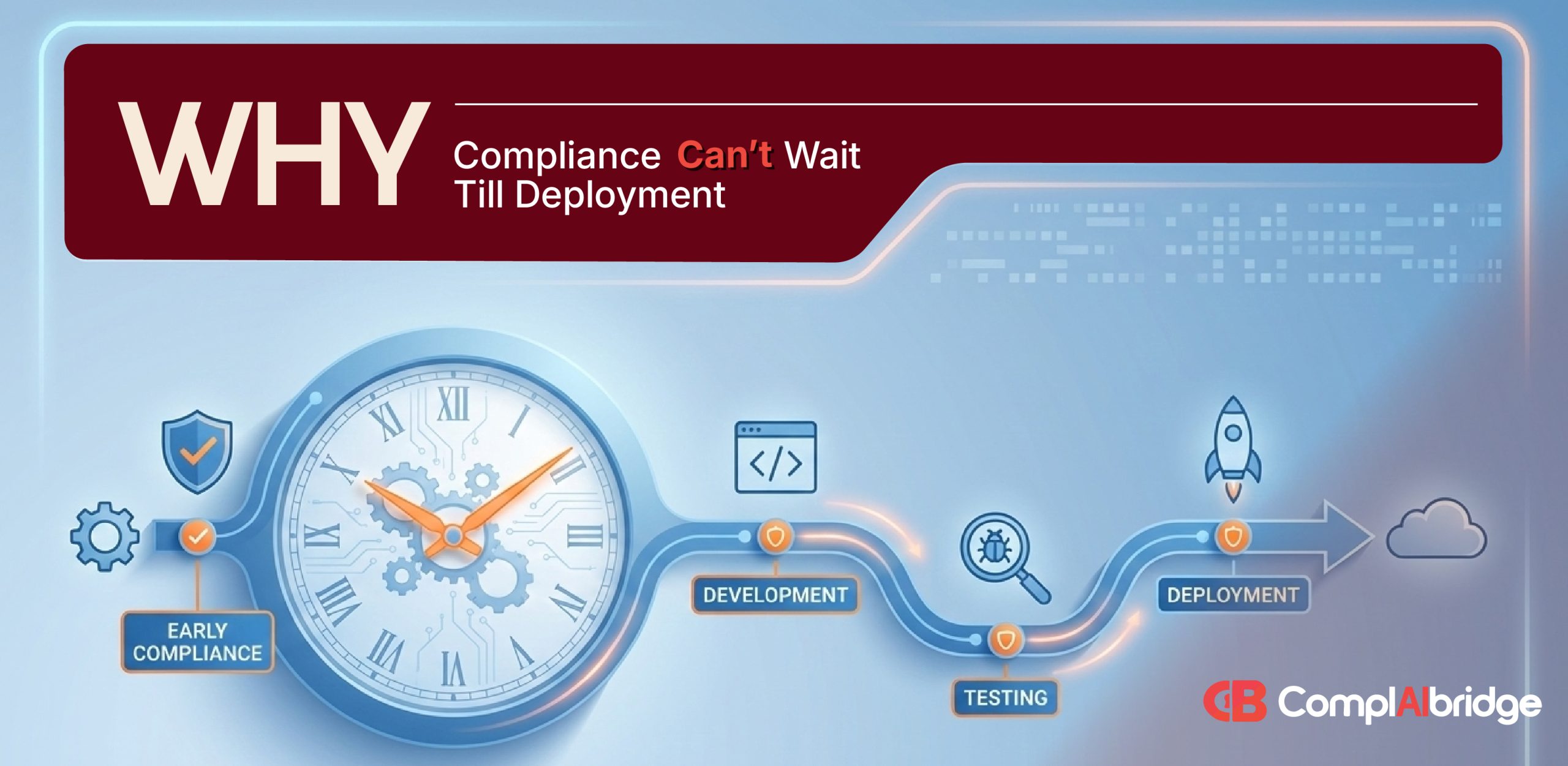
Why Compliance Can't Wait Till Deployment
Build the product. Deploy the system. Then run checks, audits, and controls to make sure everything is "compliant enough." That approach no longer works.
Get Early Access
Ready to make compliance
part of how you build?
Get in touch and we'll show you exactly how ComplAIbridge fits your stack, your team, and your frameworks.
No deck. No sales cycle. Just the product.