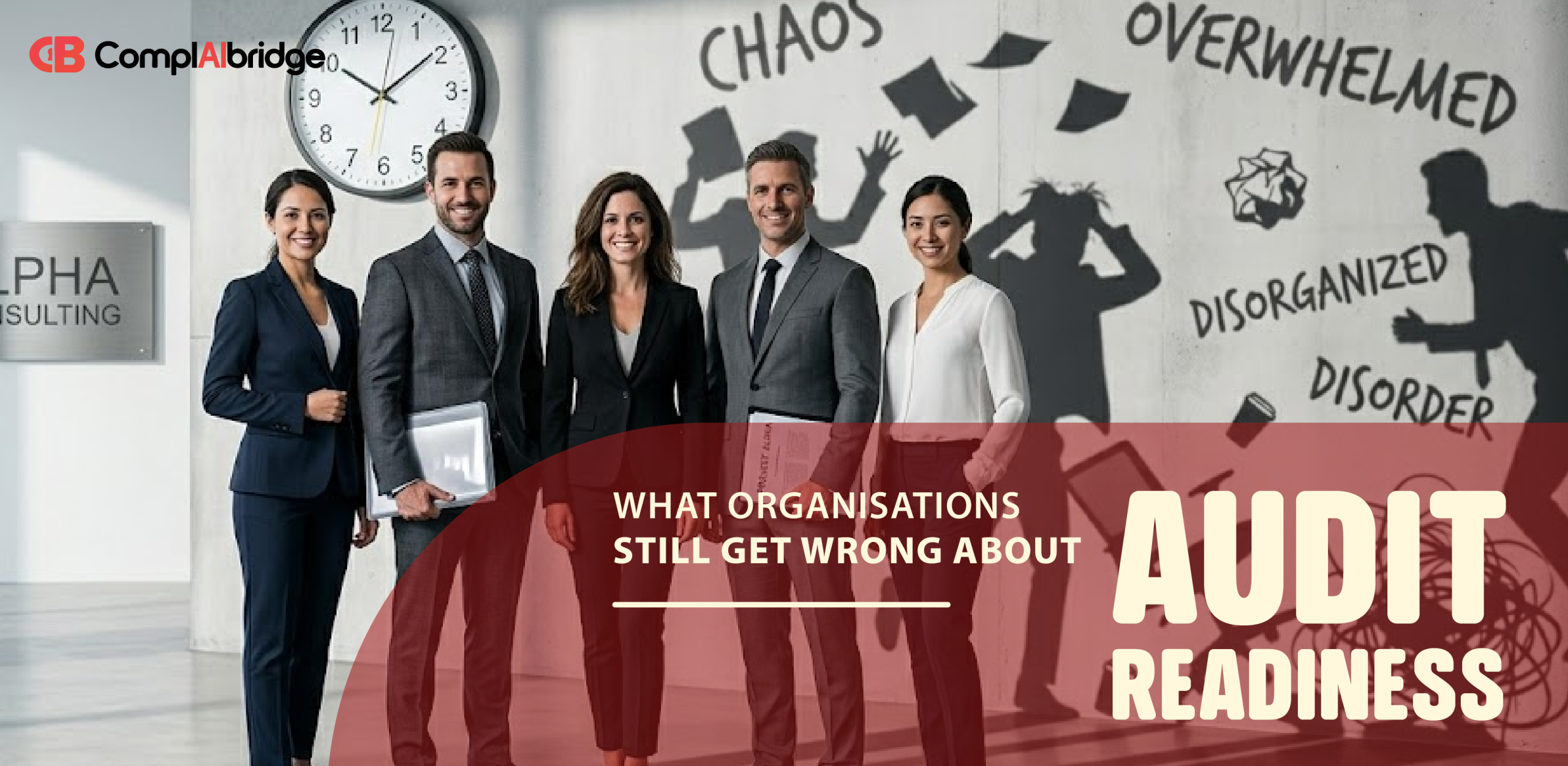
Most organisations say they're "audit-ready" right up until the audit actually begins.
That's when the familiar patterns emerge: spreadsheets are dusted off, Slack messages fly asking for screenshots, teams scramble to prove controls that were implemented months ago, and everyone works backwards under pressure. The problem isn't a lack of effort. It's a fundamental misunderstanding of what audit readiness really means.
Audit readiness is not about passing an audit once a year. It's about being able to prove, at any moment, that your controls exist, are working, and are traceable back to real requirements. And this is exactly where many organisations still get it wrong.
Mistake #1: Treating spreadsheets as a compliance system
Spreadsheets remain the default "system of record" for compliance in far too many organisations. Controls are listed in one tab, evidence links in another, audit comments somewhere else entirely. Over time, these files become bloated, outdated, and dependent on tribal knowledge.
The real issue with spreadsheets isn't just that they're manual. It's that they have no concept of traceability. There's no live link between a regulatory requirement, the control that satisfies it, and the evidence proving it works today. When auditors ask why a control exists or where it's implemented, teams are forced to reconstruct the story after the fact.
Complaibridge moves organisations away from static documents by mapping requirements, controls, and evidence into a single system of record. Instead of maintaining spreadsheets for audits, teams maintain compliance continuously, and audits simply become a snapshot of what already exists.
Mistake #2: Chasing evidence at the last minute
Last-minute evidence hunting is one of the biggest signs of poor audit readiness. Screenshots are captured days before the audit. Logs are pulled manually. Tickets are reopened just to prove something was done months ago.
This reactive approach introduces risk in two ways. First, it increases the likelihood of missing or inconsistent evidence. Second, it creates a disconnect between how controls actually operate and how they're presented to auditors. Evidence becomes performative rather than factual.
True audit readiness means evidence is collected as a by-product of operations, not as a separate activity. Complaibridge enables this by continuously collecting and mapping evidence as systems change, configurations update, and processes run. When the audit begins, the evidence already exists - complete, timestamped, and defensible.
Mistake #3: No traceability between requirements, controls, and outcomes
One of the most common audit questions is also the hardest to answer: How does this control satisfy this specific requirement?
In many organisations, the answer lives in someone's head. Requirements are documented in policy tools. Controls live in architecture diagrams or ticketing systems. Evidence sits in shared drives. There is no "golden thread" connecting them.
See it in action
See how ComplAIbridge fits your stack
Book a 20-minute walkthrough - no deck, no sales cycle, just the product.
Book a DemoWithout traceability, audits become subjective. Teams explain intent instead of showing proof. Auditors lose confidence, not because controls don't exist, but because organisations can't clearly demonstrate how everything connects.
This is where Complaibridge fundamentally changes the model. By maintaining continuous traceability from requirements to controls to evidence, the platform ensures every audit question has a clear, defensible answer. Compliance stops being a collection of artefacts and becomes a living system.
Mistake #4: Assuming approvals equal compliance
Change approvals, sign-offs, and governance gates often give teams a false sense of security. Just because something was approved doesn't mean it remained compliant after deployment. Configurations drift. New assets appear. Controls break quietly.
Most audit findings don't come from malicious behaviour, they come from untracked change.
Audit readiness requires visibility into how compliance evolves over time, not just how it looked at approval. Complaibridge continuously maps changes across projects and production environments to compliance controls, ensuring that what was approved is still compliant today.
Mistake #5: Treating audits as events instead of outcomes
Perhaps the biggest misconception is viewing audits as a milestone to prepare for, rather than an outcome of good operational discipline. When audit readiness is event-driven, teams optimise for passing, not for resilience, speed, or trust.
Modern regulators and auditors are shifting expectations. They want provable compliance, not explanations. They expect organisations to demonstrate control effectiveness continuously, not reconstruct it annually.
This shift is exactly why platforms like Complaibridge exist. By embedding compliance into requirements, design, build, test, and change stages, audit readiness becomes the natural outcome of how work gets done, not a separate, stressful exercise.
Getting audit readiness right
Organisations don't struggle with audits because they don't care about compliance. They struggle because their tools and processes were never designed for continuous proof.
Moving away from spreadsheets, eliminating last-minute evidence hunts, and establishing real traceability are no longer "nice to have." They're foundational to modern audit readiness.
Audit readiness today isn't about being prepared for the next audit. It's about being able to prove compliance at any moment confidently, consistently, and without disruption. And that's where the right systems, like Complaibridge, make all the difference.
Keep reading
 Compliance
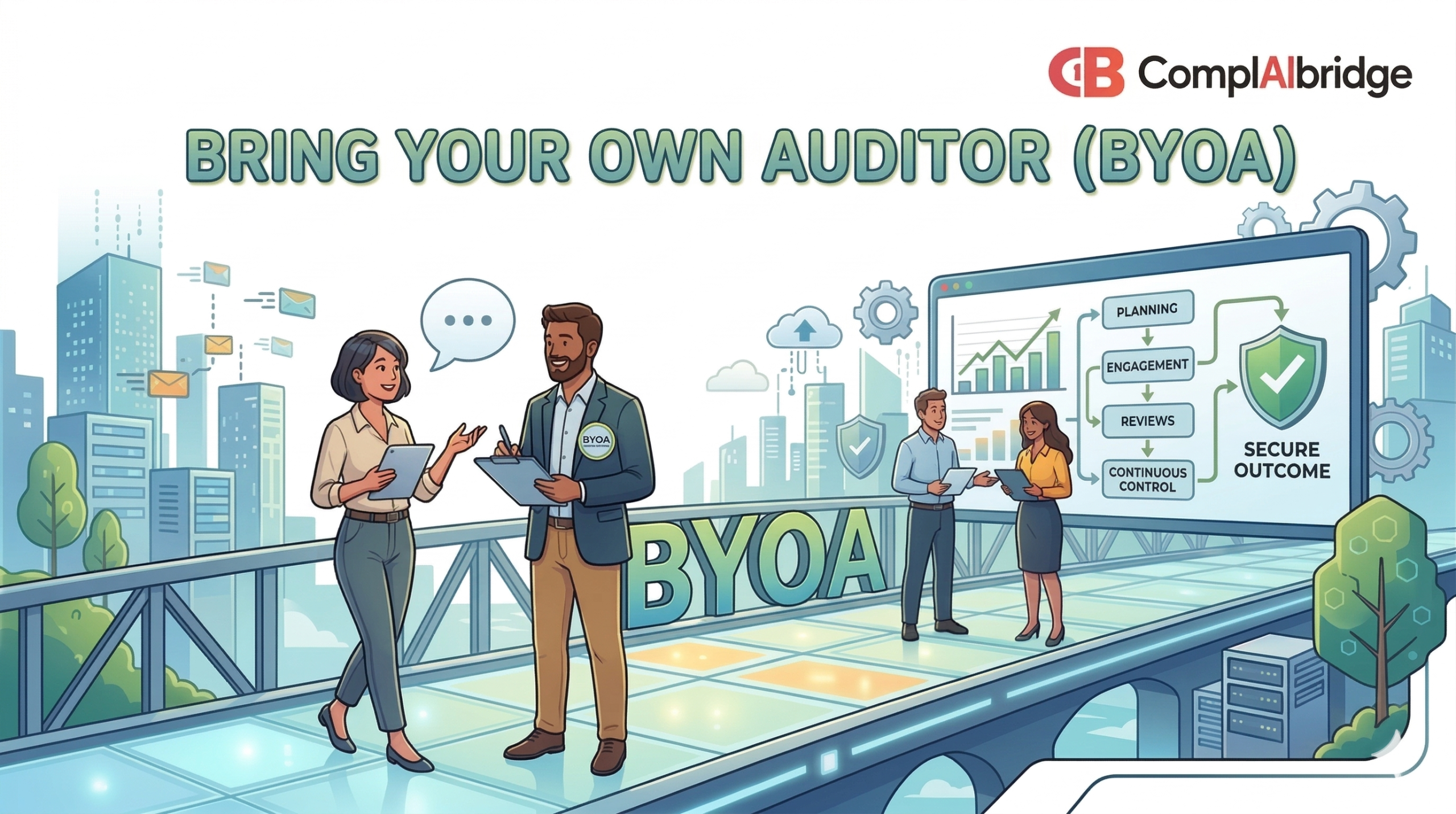
Bring Your Own Auditor (BYOA): Why Auditor Independence Matters More Than Ever
For most organisations, audits are something you prepare for and not something you control. That's where BYOA changes the equation.
 Compliance
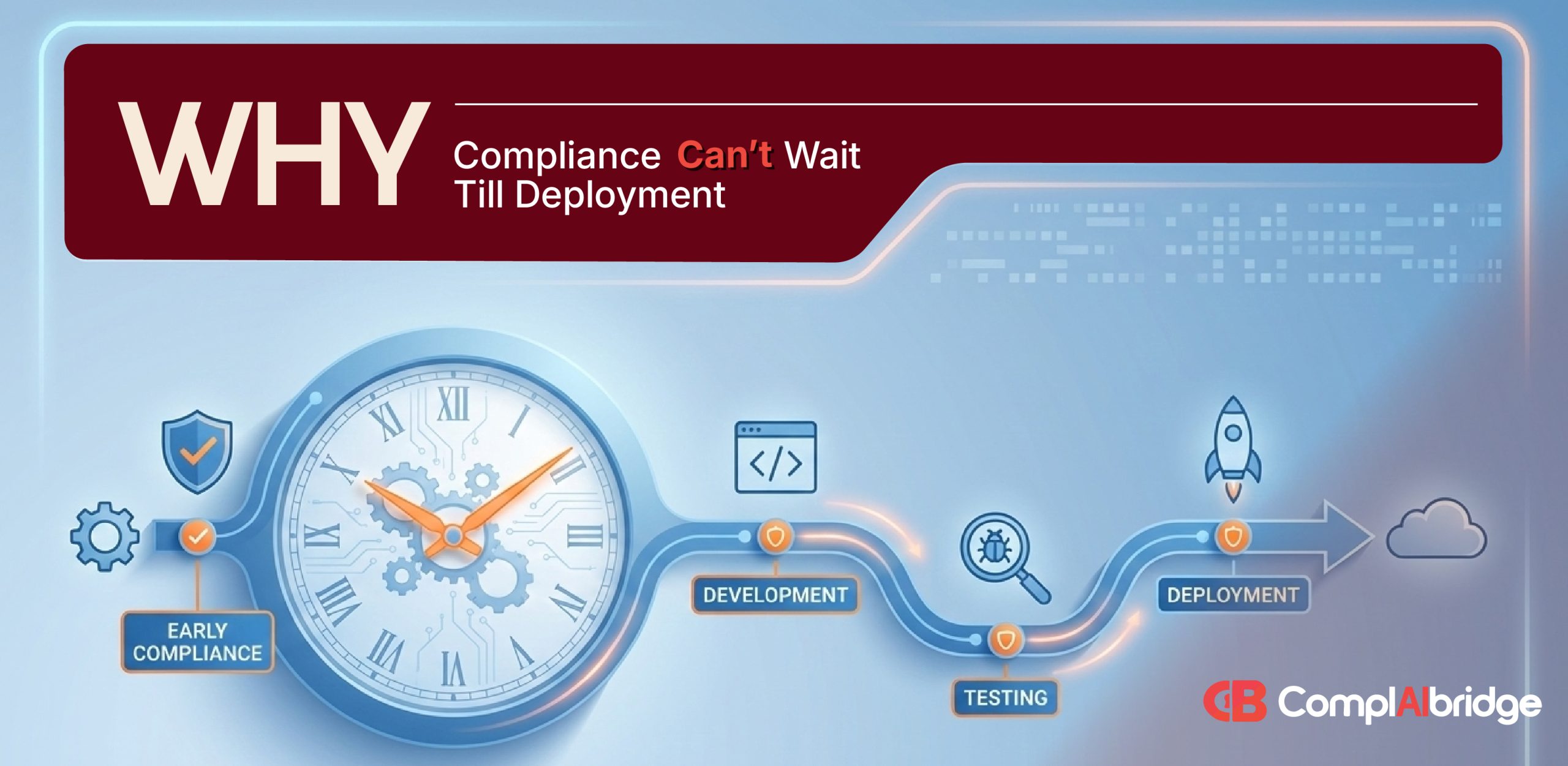
Why Compliance Can't Wait Till Deployment
Build the product. Deploy the system. Then run checks, audits, and controls to make sure everything is "compliant enough." That approach no longer works.
Get Early Access
Ready to make compliance
part of how you build?
Get in touch and we'll show you exactly how ComplAIbridge fits your stack, your team, and your frameworks.
No deck. No sales cycle. Just the product.