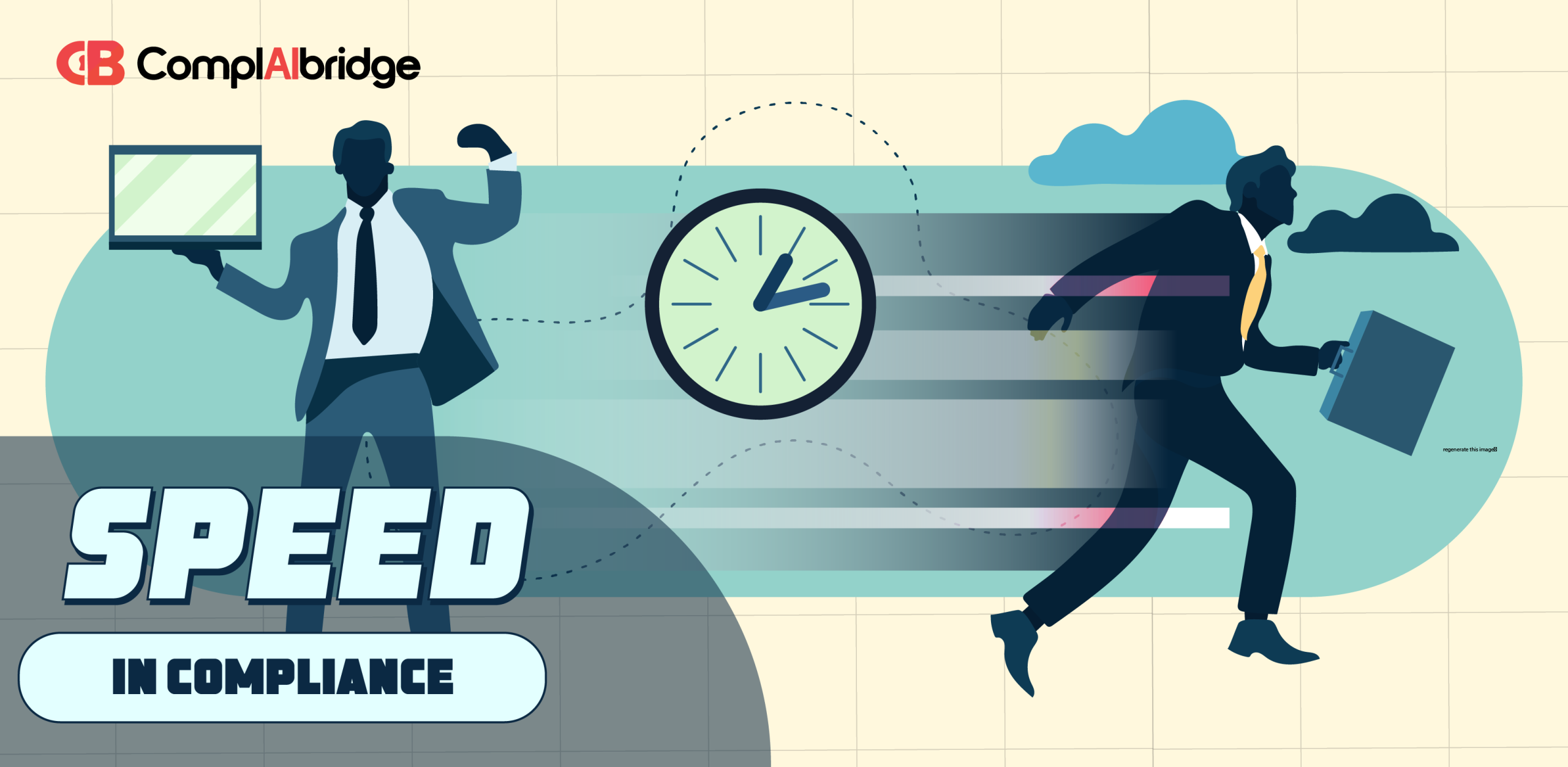
We celebrate speed everywhere. Faster product launches. Faster deployments. Faster decisions. In most industries, speed is a competitive advantage. But in compliance, speed tells a very different story.
Because, when it comes to compliance, faster doesn't always mean better. In fact, done wrong, it usually means the opposite.
The problem with speed in compliance
In software, speed means efficiency. In logistics, speed means optimisation. In customer experience, speed means convenience. But in compliance, speed is often misunderstood.
It's reduced to faster audits, quicker certifications, and shorter timelines to get compliant.
And that's where things start to break.
Because you need to prove that your systems, controls, and processes actually work consistently, reliably, and under scrutiny.
When speed becomes the priority, the focus shifts from accuracy to completion. And that's when organisations start optimising for the wrong outcome of passing and not proving.
Why precision matters more than speed
In high-stakes environments like security and compliance, you can't rush trust. A fast audit might give you a report. But it rarely gives you confidence. True assurance comes from precision. The kind of work that is thorough, traceable, and defensible.
It's the difference between "we passed the audit" and "we can stand behind our compliance posture."
Because when something goes wrong, like a breach, a regulator review, or a customer escalation, speed won't protect you.
Precision will.
Organisations that invest in getting compliance right don't just pass audits. They build credibility with customers, partners, and regulators. They reduce rework. They avoid surprises. They create systems that hold up in the real world and not just on paper.
The false trade-off: speed vs compliance
There's a common assumption that you have to choose: move fast or stay compliant, ship quickly or do things properly. But this is a false dilemma.
The real issue isn't speed but how you achieve it. If speed comes from shortcuts like skipping validation, rushing evidence, or relying on surface-level checks, then yes, compliance suffers.
If speed comes from better processes, smarter systems, and stronger culture, then speed and compliance don't conflict. They reinforce each other.
Where most organisations go wrong
In practice, most compliance challenges don't come from a lack of effort. They come from broken systems.
Processes are too complex. Approvals are fragmented. Evidence is manual. Systems don't talk to each other.
The result: bottlenecks slow everything down, teams duplicate effort, errors creep in, and compliance gaps increase.
See it in action
See how ComplAIbridge fits your stack
Book a 20-minute walkthrough - no deck, no sales cycle, just the product.
Book a DemoIronically, these organisations are both slow and non-compliant.
Rethinking speed: from output to system design
Real progress comes from redesigning how compliance works.
When done right, speed in compliance looks very different: validation happens automatically as systems operate, evidence is captured in real time rather than chased later, controls are continuously monitored rather than periodically reviewed, and workflows are streamlined rather than layered with manual checkpoints.
This is where speed stops being a risk and becomes a by-product of good design.
Think of it like modern traffic systems. Instead of slowing cars down at one checkpoint, average speed enforcement ensures consistent compliance across the entire journey.
Compliance works the same way. It's not about one moment. It's about continuity.
How Complaibridge gets this right
At Complaibridge, we optimise for precision at scale and speed follows naturally.
By embedding compliance into systems and workflows, we ensure that evidence is captured as a by-product of operations, controls are continuously validated, and requirements, controls, and evidence are fully traceable.
The result is real-time, reliable compliance that holds up under scrutiny. And that's where true speed comes from.
The role of technology, process, and culture
Achieving this balance requires more than tools. It requires alignment across three areas:
Process: Lean, well-designed workflows reduce friction and make compliance easier to follow and verify.
Technology: Connected systems, automation, and real-time validation eliminate manual errors and delays.
Culture: Teams that prioritise quality, transparency, and accountability naturally drive both compliance and speed.
When these three come together, organisations don't have to choose between moving fast and staying compliant. They achieve both.
Conclusion
Speed, on its own, is not the goal in compliance. Precision is.
Because the real question isn't how fast you can get compliant. It's whether your compliance can stand up to scrutiny, consistently, confidently, and without doubt.
Get that right, and speed won't be something you chase. It'll be something you unlock.
Keep reading
 Insights
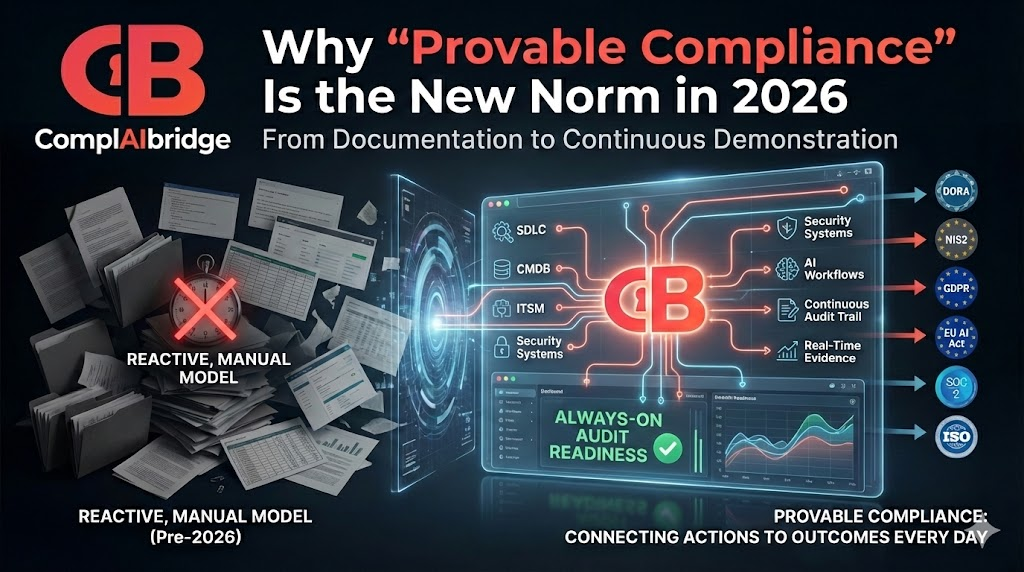
Why "Provable Compliance" Is the New Norm in 2026
For decades, compliance was treated as a documentation exercise. In 2026, that model is officially broken.
 Insights
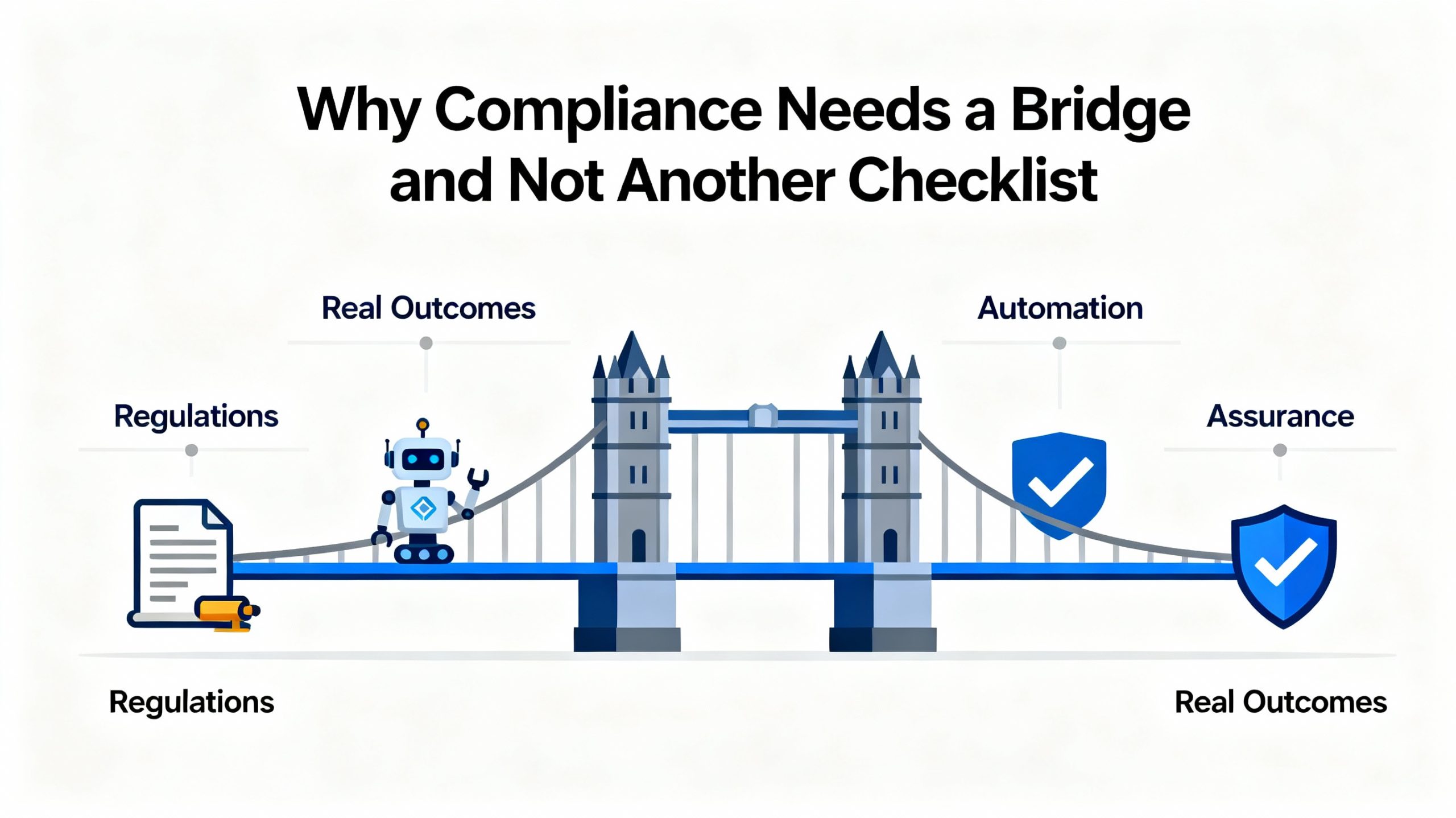
Why Compliance needs a bridge and not another checklist
Even today, for most organizations, compliance still feels like a never-ending loop of forms, audits, and documentation.
Get Early Access
Ready to make compliance
part of how you build?
Get in touch and we'll show you exactly how ComplAIbridge fits your stack, your team, and your frameworks.
No deck. No sales cycle. Just the product.